
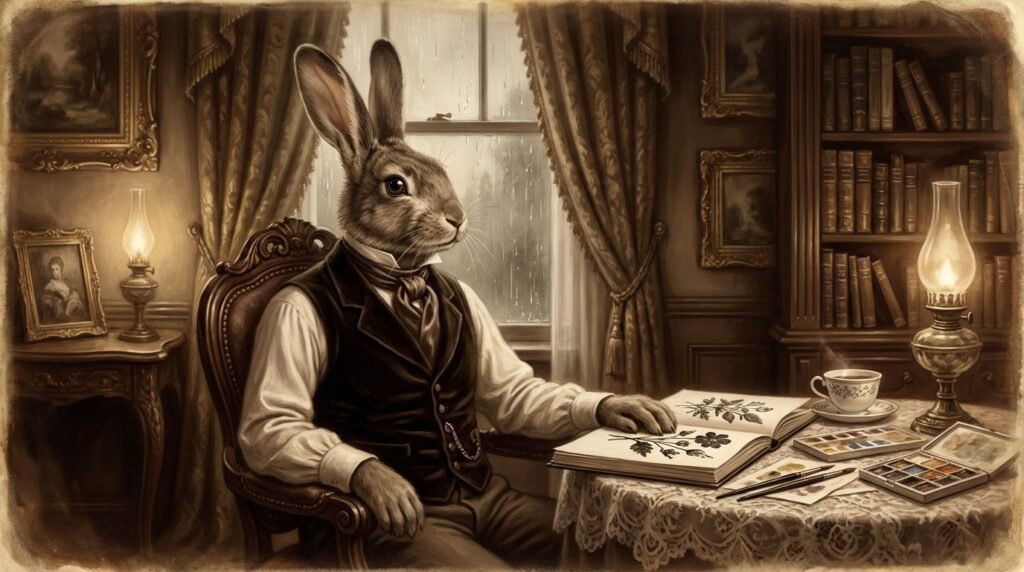
In a cozy rabbit house, nestled beneath a grand old oak, the walls were lined with bookcases and golden framed pictures of loved ones. Rain pitter pattered on the tiny windows, casting darkened patterns on the earthen floor. Yet, within this once charming abode, tensions simmered.
Henrietta, the wife, paced back and forth with twitching ears, her voice rising in agitation. “You don’t understand, Harold! You don’t care about the things that I do. We are going in different ways and I just want to be with someone who makes me happy” Her words echoed off the walls, harsh and painful to hear. Harold, her husband, sat in his favorite high-back leather chair, a point of contention in and of itself, his ears drooping in defeat. “I try so hard, Henrietta. I want to support you but it seems like I can never do as much as you need. What more do you want?” he pleaded, his heart heavy with despair.
Henrietta’s melancholy often wrapped around her like a thick fog, making it hard for her to see the beauty in their life together. She was trapped in a dark well of sadness, where every small joy was overshadowed by her internal struggles. Her hypersensitivity turned even minor issues into emotional landmines, causing her to react with a victim mentality, “You’re attacking me!” Or these days, more often than not, thanks to the clover tonic, a silent indifference. Any attempt by Harold to approach her emotional needs was met with defensiveness. In her mind, his concern just created anxiety and a wave of panicky emotion. Insecurity gnawed at her, leading her to question her worth and their love. She often compared herself to others, feeling inadequate and unlovable, which fueled her accusations against Harold. “If you truly cared, you would join me in the things that are important to me,” she insisted, knowing deep down the hurdles she created were insurmountable.
As their conversation spiraled, the emotional toll on Harold became apparent. He felt like a shadow in his own home, always striving to lift Henrietta’s spirits but never quite reaching her expectations. His efforts were met with dismissal and blame, as she twisted his intentions into further proof of his failure. “It’s always you, Harold. You never do enough,” she said, her voice laced with a mix of anger and sorrow. The weight of the shame and guilt pressed down on him, making him feel powerless. He was left with the painful realization that no matter how much love he offered, it would never be enough to fill the void she felt inside.
Finally, Henrietta took a deep breath, her resolve hardening. “I need to find happiness on my own,” she declared, a mix of defiance and desperation in her tone. “I can’t keep living like this. I need to escape this place and you.” The words hung heavy in the air, leaving Harold stunned and heartbroken. In that moment, it became clear to him that he was trapped in a cycle of blame and emotional turmoil, unable to break free from her perception of victimhood. The little rabbit house, once a symbol of their love, now felt like a prison, filled with unfulfilled dreams and unspoken grief.