

The Saving Reality of Baptism: Insights from Matthew Henry on 1 Peter 3:21
The apostle Peter makes a striking connection in his first epistle: he links the salvation of Noah’s family through water to the Christian sacrament of baptism. In his commentary on 1 Peter 3:21, Matthew Henry explores this profound parallel, guiding us to understand what constitutes a truly “saving baptism.” He moves far beyond the physical ritual, identifying three essential components that define its spiritual power.
1. The Figure: Salvation Through Water Henry first establishes the historical type. Noah and his household were saved through the waters of the flood—a judgment that cleansed the earth but also delivered the righteous. This physical salvation through water prefigures the spiritual deliverance symbolized in baptism. Just as the ark carried Noah through the judgment waters, baptism now signifies our passage through the death and resurrection of Christ, carrying us from the realm of judgment into new life.
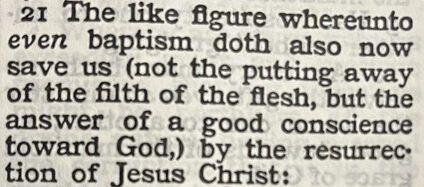
2. The Answer: A Good Conscience Crucially, Henry emphasizes that the efficacy of baptism is not in the outward washing of the body but in the inward disposition of the heart. He clarifies it is “the answer of a good conscience toward God.” This “answer” is a pledge or appeal, a conscious, heartfelt response from the individual. It signifies a turning away from sin and a commitment to walk in moral purity before God. Without this internal reality of a cleansed conscience, the external rite remains an empty form.
3. The Foundation: The Resurrection of Christ Finally, Peter anchors this sacrament in its ultimate power source: “by the resurrection of Jesus Christ.” Henry highlights that our new life in baptism is derived entirely from Christ’s victorious triumph over death. It is not our own resolve that saves us, but the completed work of Christ, in whose death and resurrection we participate by faith through this sacred sign.
This understanding paints a clear picture: saving baptism is a covenant transaction. It is a God-ordained sign and seal in which, by faith, the believer answers with a conscience cleansed by the blood of Christ, is united to His death and resurrection, and receives the promise of salvation.
In our contemporary context, this robust, three-fold understanding is often diminished. Many in the church approach baptism with minimal preparation, viewing it as a cultural tradition or a personal milestone rather than a covenantal event. If Christians do not adhere to this biblical meaning, baptism risks becoming either a hollow ritual devoid of conscience or a misleading talisman that promises grace without requiring the transformation of the heart. The challenge for the modern church is to reclaim the profound significance Peter and Henry articulate: that baptism is most powerful when it is the God-given moment for a believer to publicly answer with a cleansed conscience, standing upon the solid foundation of Christ’s resurrection.